
Considering A Beautiful New Hardscape? How Expert Masonry Services Can Help
A well-designed hardscape can make an ordinary yard more useful, attractive, and cohesive. Patios, walkways, steps, retaining walls, pool surrounds, and decorative concrete surfaces can define outdoor areas while improving access and supporting the surrounding landscape. These features must withstand traffic, moisture, soil movement, and seasonal temperature changes, so appearance is only one part of a successful project.
Professional masonry services can help property owners move from a general idea to a finished hardscape that fits the site and serves a clear purpose. Careful planning can reduce issues such as uneven surfaces, poor drainage, unstable walls, or unsuitable materials. Understanding the major decisions makes it easier to evaluate options before work begins.
Start With the Purpose of the Space
Every hardscape should begin with a practical goal. A homeowner may want a patio for outdoor meals, a safer walkway between entrances, new steps leading to a porch, or a retaining wall that manages a sloped section of land. Its intended use helps determine the size, location, shape, and material requirements.
The intended traffic level also matters. A quiet garden path does not face the same demands as a driveway, pool surround, or frequently used patio. Experienced contractors can recommend dimensions, textures, and construction methods suited to the expected use. Early planning helps prevent an attractive feature from becoming inconvenient to use or maintain.
Choose Materials That Suit the Property
Natural stone, cultured stone, brick, concrete masonry units, and decorative concrete each create a different look. Natural stone offers varied color and texture, while cultured stone can provide a similar effect at a lower cost. Brick brings traditional character, and stamped concrete can imitate materials such as stone, brick, or wood while creating a continuous surface.
Material selection involves more than appearance. Masonry services may account for exposure to water, freeze-thaw cycles, expected loads, surrounding architecture, and the amount of upkeep a homeowner is prepared to perform. A material suited to a garden wall may not perform as well on steps or a driveway.
Prepare the Site for Long-Term Stability
The finished surface depends heavily on what lies beneath it. Soil conditions, slope, drainage, and base preparation can affect whether a hardscape remains level or begins to shift. Removing unsuitable material, compacting the base, and setting the proper elevation are important before installation.
Structural performance is especially important when concrete masonry units are used. According to the Concrete Masonry & Hardscapes Association, the minimum net area compressive strength of concrete masonry units complying with ASTM C90 is 2,000 psi. That benchmark shows why material specifications and installation methods should be considered together.
Create Patios That Support Outdoor Living
A patio can function as an outdoor room for dining, conversation, or relaxation. Its layout should allow space for furniture and comfortable movement without overwhelming the yard. The location may also need to account for doors, steps, nearby landscaping, sunlight, and water runoff.
Through professional masonry services, a patio can be shaped around the property rather than forced into a standard rectangle. Stone patios can create a natural appearance, while stamped or stained concrete can offer a more uniform surface with customized patterns and colors. Borders and texture changes can distinguish seating areas from walking routes.
Improve Access With Walkways and Steps
Walkways connect important areas of a property and help direct people safely through the landscape. A thoughtfully placed path can link a driveway, patio, garden, porch, or secondary entrance while reducing wear on lawns. Width, slope, texture, and edge definition affect how comfortable and secure the walkway feels.
Steps require even greater attention because inconsistent heights or shallow treads can create hazards. Masonry services can help coordinate stone or concrete steps with adjoining walls, porches, and sidewalks so the transition feels intentional. Handrail requirements, landing space, and drainage may also require consideration.
Use Retaining Walls for Support and Definition
Retaining walls can stabilize soil on sloped properties while adding visible structure to the landscape. They may create level planting areas, define a patio edge, or separate changes in elevation. Depending on the site, a wall may be built with natural stone, concrete block, or another masonry material that complements nearby features.
A retaining wall must manage pressure from the soil behind it. Height, drainage, footing conditions, and reinforcement can influence how the wall performs over time. Contractors providing masonry services may evaluate these factors before recommending a design, reducing the risk of leaning, cracking, or displacement.
Add Character With Decorative Concrete
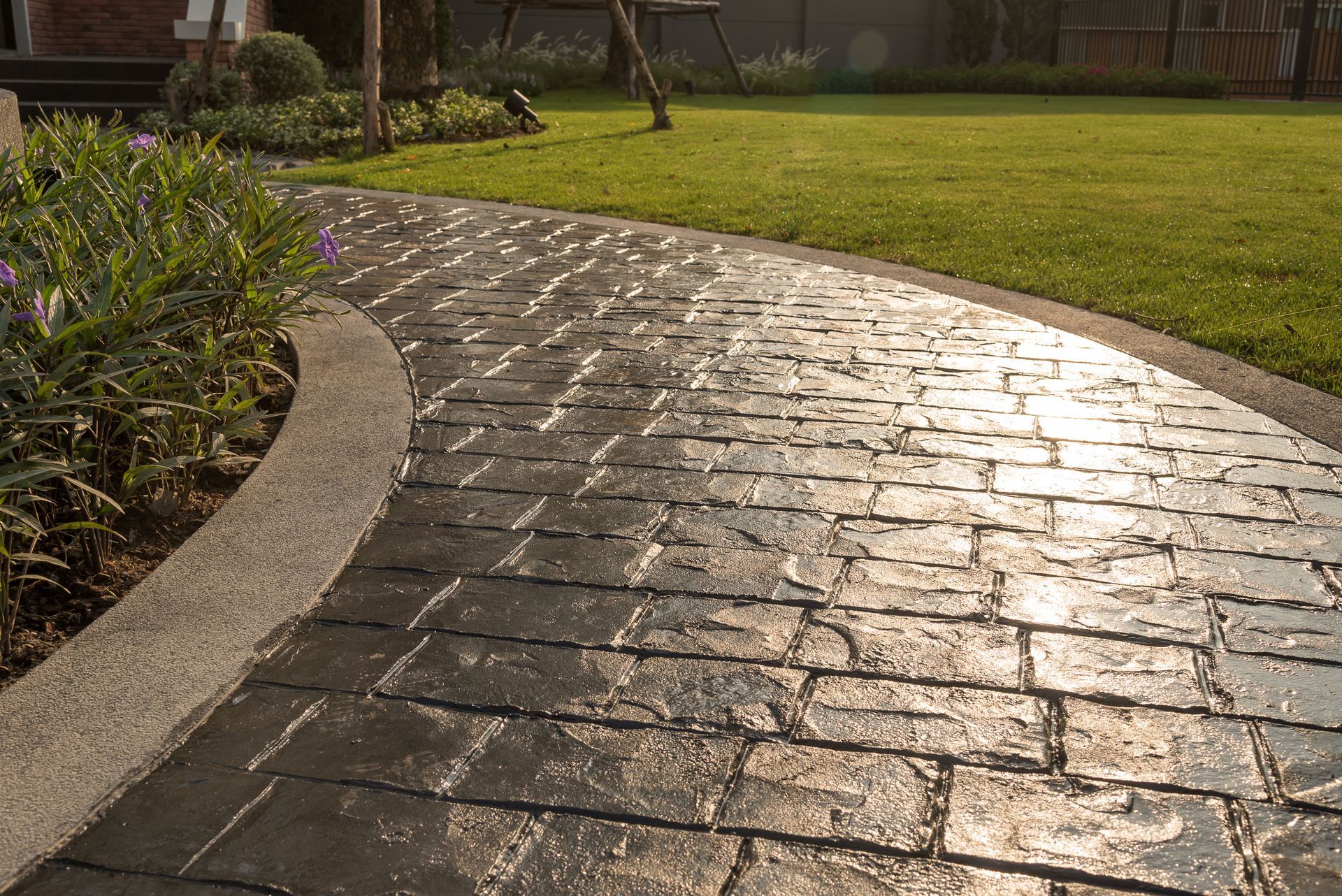
Decorative concrete allows homeowners to introduce pattern and color without giving up the strength of a concrete surface. Stamping can reproduce the appearance of slate, brick, cobblestone, or wood, while staining can create tonal variation that coordinates with the home. These finishes can be used on patios, driveways, walkways, steps, porches, and pool surrounds.
The final appearance depends on decisions made before and during installation. Pattern scale, border placement, color combinations, and joint locations should work together rather than competing for attention. Experienced masonry services can explain how resealing and routine care may preserve the surface.
Blend New Features With Existing Construction
A new hardscape should look connected to the home and other outdoor elements. Exact material matching is unnecessary, but color, texture, scale, and architectural style should feel compatible. A contemporary home may benefit from cleaner lines and restrained patterns, while an older property may look more natural with irregular stone or traditional brickwork.
Transitions deserve special attention when new work meets an existing porch, foundation, sidewalk, or wall. Elevation differences, joints, and material changes can appear awkward when they are not planned carefully. Thoughtful installation can make these connections feel deliberate while accommodating drainage and movement.
Decide Whether to Repair or Replace Existing Hardscapes
Not every worn hardscape needs complete replacement. Minor surface damage, open joints, isolated settling, or faded decorative concrete may be addressed through repair, repointing, leveling, resealing, or restoration. The right response depends on the cause and extent of deterioration.
Replacement may be more practical when damage is widespread, the base has failed, or the layout no longer meets the property's needs. A contractor should examine the visible surface and supporting conditions before recommending a course of action. This evaluation helps avoid cosmetic work that leaves the underlying problem unresolved.
Plan the Project Around the Entire Property
Hardscape improvements can affect more than the immediate installation area. Water may be redirected toward or away from foundations, new paths may alter foot traffic, and raised surfaces may change how planting beds are accessed. Reviewing the entire property helps identify conflicts before construction.
The planning phase may also involve demolition, excavation, grading, drainage adjustments, or coordination with landscape lighting and irrigation components. Because these activities are not included with every project, owners should confirm the proposal's scope. Clear expectations about materials, preparation, cleanup, scheduling, and maintenance can prevent misunderstandings.
Bring the Hardscape Vision Together
A successful hardscape balances appearance, structural performance, and everyday use. Material selection, base preparation, drainage, proportions, and transitions all contribute to whether a feature remains attractive and functional. Experienced professionals can address these details before they become expensive corrections.
J&A Masonry, LLC provides stonework, concrete, stamped and decorative concrete, retaining wall work, and related hardscape solutions throughout the Capital Region and Hudson Valley area. Homeowners and commercial property owners considering a new patio, walkway, set of steps, retaining wall, driveway, pool surround, or other supported project can contact the company to discuss their goals and request an estimate.
Share On: